

For almost twenty years, I thought I understood product.
I learned how to run research, facilitate workshops, build design systems, lead teams, collaborate with engineering, and navigate the messy reality of product development.
I worked with talented founders. Great product leaders. Incredible teams ✨ I genuinely believed I understood what it meant to build something people wanted.
Then I tried to build businesses of my own. Not venture-backed startups. Just ideas I couldn’t stop thinking about 💡
An organic skincare brand
Or at least, that was the plan.
I spent months learning how to formulate products, sourcing ingredients and studying organic cosmetics. Eventually, I discovered what it would actually take to bring the idea to life: a laboratory, regulatory approvals, an investment I simply wasn’t prepared to make.
For a few weeks, I thought the project was dead. Then I realised something: what I really cared about wasn’t manufacturing skincare, it was helping people make healthier choices.
So I changed the vehicle, not the mission. Instead of building a skincare brand, I launched a wellness e-commerce store.
It wasn’t the original idea. But it kept the original purpose alive. Eventually, I closed it too. Not because I stopped believing in the mission. Because the evidence told me it wasn’t gaining enough traction, and I wasn’t willing to keep forcing something reality wasn’t supporting.
A little later, I explored another idea.
A speciality coffee and design subscription
I love speciality coffee. I love design. It felt obvious. This time, I decided to validate it properly before building anything. For three months, I spoke to people, tested the concept and estimated the market. The conclusion was uncomfortable. Fewer than twenty people were likely to buy it.
That wasn’t a business. It was a hobby wearing a business model.
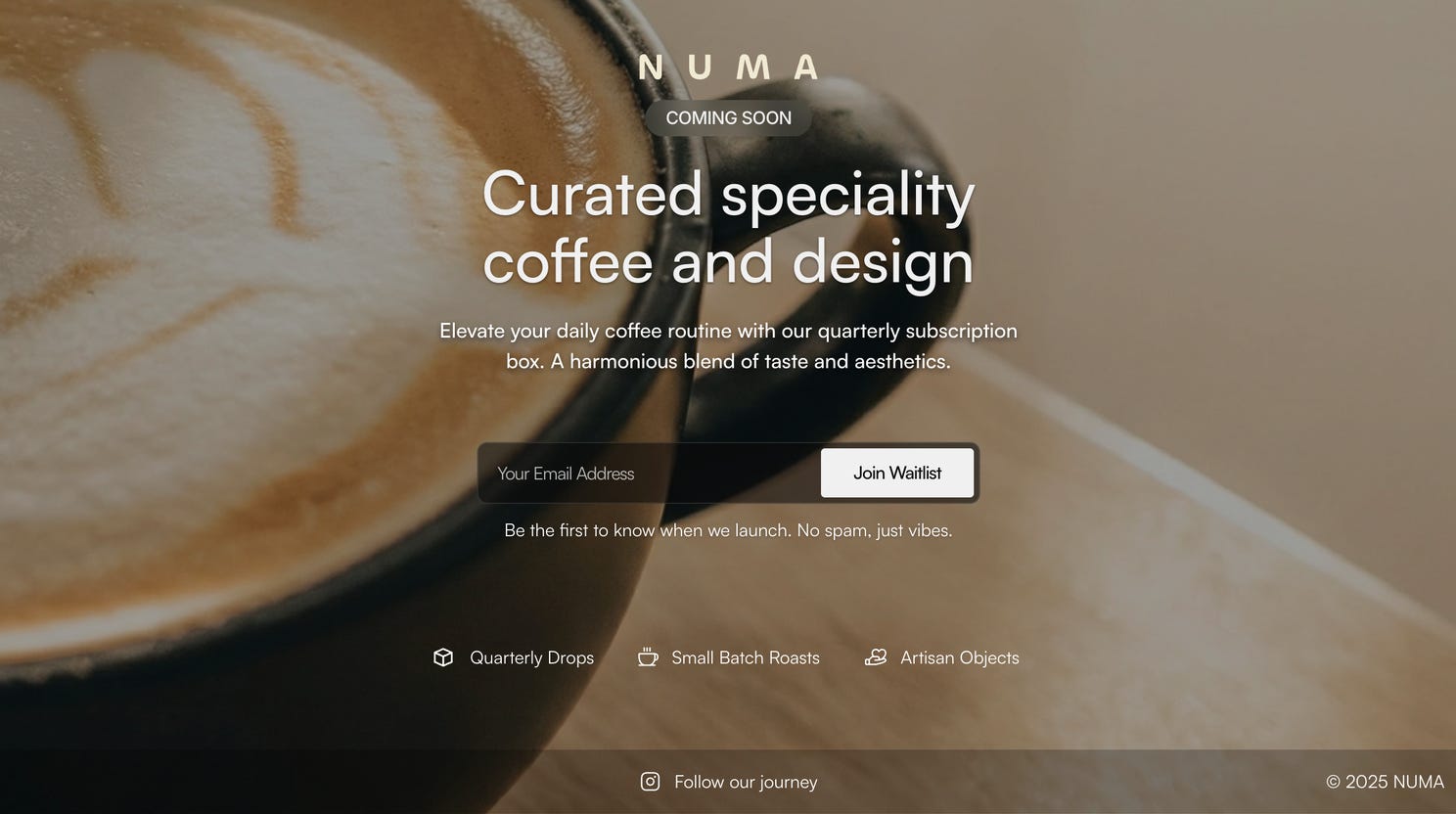
And maybe the hardest part wasn’t letting go of the idea. It was admitting that I loved coffee enough to spend my mornings drinking it... But not enough to spend the next ten years building a company around it.
Looking back, neither of those projects failed
They quietly dismantled the way I thought about product. For years, I’d encouraged teams to test assumptions, to follow the evidence, to avoid falling in love with solutions.
Building something of my own was the first time I had to follow that advice myself. I had to kill ideas I loved. I had to change direction when the evidence contradicted what I wanted to believe. I had to separate my identity from my ideas. And that’s much harder than it sounds!
I realised I’d spent years discussing product with founders. But discussing someone’s decisions isn’t the same as carrying their uncertainty. The moment your own time, money and energy are tied to every decision, product stops feeling like a roadmap, it becomes a series of bets. Some informed, some intuitive. None guaranteed 🎲
That’s why my conversations with founders and product leaders are different today. I naturally ask about pricing, business models, customer acquisition. What would have to be true for this to become a real business? Not because I’m trying to become a founder, but because I finally understand the weight behind those questions.
Ironically, trying to build businesses didn’t make me leave product. It made me realise I’d only been looking at one part of it.
The biggest lesson I learned wasn’t how to build a business. It was learning how to let go of ideas when reality asked me to.
And I think that’s true for products too. The hardest part isn’t coming up with ideas. It’s having the humility to change them when you learn something new.
It took trying to build my own businesses to truly understand the weight of the decisions I’d spent twenty years helping other people make.
First published in the LinkedIn edition of In the Room, 24 July 2026.